


Buddha’s complete teachings
Bhikkhu Bodhi and Nanamoli, as well as Maurice Walshe have translated the four books of the Buddha’s complete teachings from the Pali language, published by Wisdom Publications, Boston, USA:
 Man, woman, equal
 Everyone who follows Buddha’s teachings is a vegetarian
While some choose to practice vegetarianism out of respect for all life, it is not a universal rule in all Buddhist traditions. Those with an ordination – bhikkhus or bhikkhunies – should eat the food they are given, whether it is meat or not. Buddha was not a vegetarian either. But a training rule in Buddhism is not to kill, so many traditions encourage vegetarian food.
 Karma is destiny
In Buddhism, karma is a conscious action, through thoughts, words and deeds. We all create karma every minute, and the karma we create affects us all the time. But all our actions – good or bad – come back to us, and are called the fruit of our actions. So life is made up of present actions, and the fruit of past actions. The future is not set in stone, the future is indefinite.
 Buddhism is a philosophy – not a religion
Buddhism has a lot of philosophy in it, as advanced as the schools of philosophy that developed in Europe. But Buddhism is still a religion, unless you define religion as belief in a creator god. The Buddha’s teachings are a spiritual training that removes problems and suffering, and focused both on this life as a human being, a future new existence and the ultimate goal – full awakening.
 All spiritual training, including Buddhism, are different paths to the same mountain top
Many religions are about a God and going to heaven. The Buddha’s teachings are a training in which wisdom is developed that removes all suffering from the mind. When awakening is reached as a human being, almost all suffering in the mind ceases, and when the body of a fully awakened human being dies, all suffering ceases – which is called nirvana. But Buddha’s teachings can also be used to create a good rebirth.
 The most important Buddhist meditation is mindfulness
Mindfulness and meditation are two different things. The eightfold path includes ideas, intentions, ethics, effort, mindfulness and meditation – all of which are important for spiritual development.
 Buddhism is pessimistic and negative
There will always be problems because there is so much we can’t control, and since we want happiness and don’t want problems, we have to learn to overcome problems and suffering – and then we are left with freedom and happiness.
 Buddhists pray to Buddha
The historical Buddha reached enlightenment himself, and the Buddha’s teachings are non-theistic. Buddha did not say that there are no gods, but that believing in them is an obstacle to awakening. Buddha is respected as a teacher, not prayed to as a god.
 The fat smiling statue is Buddha
This monk lived around the year 1000 AD – a happy, humorous and fat monk with an eccentric lifestyle – therefore often called “The Laughing Buddha”. His name was Qici, he was nicknamed Budai, and belonged to Chan Buddhism in China.
 Buddhism started in Tibet, and the Dalai Lama is the top leader
Buddhism started with Siddharta Gotama in India 2,500 years ago, and came to Tibet around 1000 AD, i.e. about 1,500 years after the Buddha’s death. Buddha instructed that no one should be the top leader of Buddhism – different Buddhist groups should exist independently, but in cooperation.
 Buddhism is nihilistic
Humans exist and live, have meaning, value and will, and the idea of non-self (anatta) only points to the fact that there is no independent essential soul/ego/self that is permanent.
Buddha taught that what we call “I” or “you” is a state consisting of physical and mental components (body, thoughts, consciousness, perception, emotions, etc) – and these components are impermanent.
Everything in a human being exists – a process that is complex and always changing – but nothing is permanent. Buddhism is a monotheistic religion
Buddhism is not a monotheistic religion like Christianity, Hinduism or Islam. Instead, Buddhism focuses on the individual’s path to awakening and liberation through wisdom.
 Buddhism is just a variant of Hinduism
Although Buddhism came from the same land as Hinduism, it is a separate tradition with unique teachings and practices. Buddha broke with key Hindu concepts, including the idea of an eternal soul (atman) and the caste system.
 Buddhism worships demons or evil forces
Buddhism recognizes the existence of negative forces, but focuses on overcoming them by developing positive qualities such as kindness, compassion and wisdom, rather than cultivating evil.
 Buddhists do not believe in science or logic
Buddhism has a long tradition of rational thinking and encourages an exploration of truth based on inquiry and experience. Many Buddhist principles can match scientific findings. For example, the mindfulness movement in psychology comes from the teachings of Buddha.
 Buddhism – A Very Short Introduction
Author: Damien Keown. Language: English. ISBN: 9780199663835. Link: Amazon
 An Introduction to Buddhism: Teachings, History and Practices
Author: Peter Harvey. Language: English. ISBN: 0521676746. Link: Amazon
 Silence is the new superpower
The brain needs silence. It needs time without music, mobile, podcasts and YouTube. Time without meetings and people. The brain likes it when you’re bored. That you don’t do anything.
- We spend little time in silence
Many of us avoid silence because we don’t want to be in touch with our own thoughts and feelings. But silence is more important than we might think.
- Silence as a subject in school
Silence, meditation and yoga. A number of experts are urging the authorities to include these subjects in school to counteract stress in many children. And in Sweden, they’re already at it.
 Nitho
NithoNitho is a Norwegian Buddhist bhikkhu, who after business school at NHH and a few years of work experience, traveled to Australia where he completed a 15-year full-time spiritual training. He now teaches retreats and Buddhist theory and practice in the Nordic countries, and is one of the leaders of the Buddhist Society of Norway – dnbf.org
 AntennaPod
Android
Open source


Collections of Buddha’s teachings
Bhikkhu Bodhi, along with others, has published several books in which important topics from the Buddha are extracted around a particular theme:
- AntennaPod
Android
Open source - Nitho
Nitho is a Norwegian Buddhist bhikkhu, who after business school at NHH and a few years of work experience, traveled to Australia where he completed a 15-year full-time spiritual training. He now teaches retreats and Buddhist theory and practice in the Nordic countries, and is one of the leaders of the Buddhist Society of Norway – dnbf.org
- Silence as a subject in school
Silence, meditation and yoga. A number of experts are urging the authorities to include these subjects in school to counteract stress in many children. And in Sweden, they’re already at it.
- We spend little time in silence
Many of us avoid silence because we don’t want to be in touch with our own thoughts and feelings. But silence is more important than we might think.
- Silence is the new superpower
The brain needs silence. It needs time without music, mobile, podcasts and YouTube. Time without meetings and people. The brain likes it when you’re bored. That you don’t do anything.

SuttaCentral.net
SuttaCentral is an online project for early Buddhist texts based in Australia. The text collection contains a complete translation of the Buddha’s teachings in English, many Norwegian translations, as well as texts in several other languages, published under a creative commons license. The founders were Rod Bucknell, John Kelly and Bhante Sujato.
Ajahn Chah – the forest tradition
Ajahn Chah was a teacher to many seniors today, including Western teachers Ajahn Brahm (Australia), Ajahn Amaro (England), Ajahn Pasanno (California).
 Noble Truths, Noble Path: The Heart Essence of the Buddha’s Original Teachings
Author: Bhikkhu Bodhi. Language: English. ISBN: 1614299188. Link: Amazon
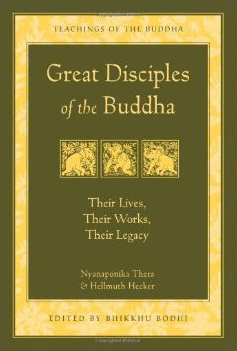 Great Disciples of the Buddha: Their Lives, Their Works, Their Legacy
Author: Nyanaponika, Hellmuth Hecker, Bhikkhu Bodhi. Language: English. ISBN: 0861713818. Link: Amazon
 The Buddha’s Teachings on Social and Communal Harmony
Author: Bhikkhu Bodhi. Language: English. ISBN: 1614293732. Link: Amazon
 The Collected Teachings of Ajahn Chah
Author: unknown. Language: English. ISBN: unknown. Link: Download
 Stillness Flowing
Author: Ajahn Chah. Translator: Ajahn Jayasaro. Language: English. ISBN: unknown. Link: Download.
Ajahn Brahm – the forest tradition
Ajahn Brahm is the teacher of Norwegian Ajahn Nitho, and spiritual advisor to the Buddhist Society of Norway. He has published many books describing spiritual development on many different levels. The book “Kindfulness” is recommended as a handbook in basic meditation for beginners.
- Noble Truths, Noble Path: The Heart Essence of the Buddha’s Original Teachings
Author: Bhikkhu Bodhi. Language: English. ISBN: 1614299188. Link: Amazon
- Great Disciples of the Buddha: Their Lives, Their Works, Their Legacy
Author: Nyanaponika, Hellmuth Hecker, Bhikkhu Bodhi. Language: English. ISBN: 0861713818. Link: Amazon
- The Buddha’s Teachings on Social and Communal Harmony
Author: Bhikkhu Bodhi. Language: English. ISBN: 1614293732. Link: Amazon
- The Collected Teachings of Ajahn Chah
Author: unknown. Language: English. ISBN: unknown. Link: Download
- Stillness Flowing
Author: Ajahn Chah. Translator: Ajahn Jayasaro. Language: English. ISBN: unknown. Link: Download.
Buddhist books in Norwegian
We have some good Buddhist books published in Norwegian, mainly from author Kåre A. Lie – who is the foremost translator of Buddha’s teachings in Norway.
- Noble Truths, Noble Path: The Heart Essence of the Buddha’s Original Teachings
Author: Bhikkhu Bodhi. Language: English. ISBN: 1614299188. Link: Amazon
- Great Disciples of the Buddha: Their Lives, Their Works, Their Legacy
Author: Nyanaponika, Hellmuth Hecker, Bhikkhu Bodhi. Language: English. ISBN: 0861713818. Link: Amazon
- The Buddha’s Teachings on Social and Communal Harmony
Author: Bhikkhu Bodhi. Language: English. ISBN: 1614293732. Link: Amazon
- The Collected Teachings of Ajahn Chah
Author: unknown. Language: English. ISBN: unknown. Link: Download
- Stillness Flowing
Author: Ajahn Chah. Translator: Ajahn Jayasaro. Language: English. ISBN: unknown. Link: Download.

Feel free to share this page with a friend:
About the Author: Nitho Bhikkhu