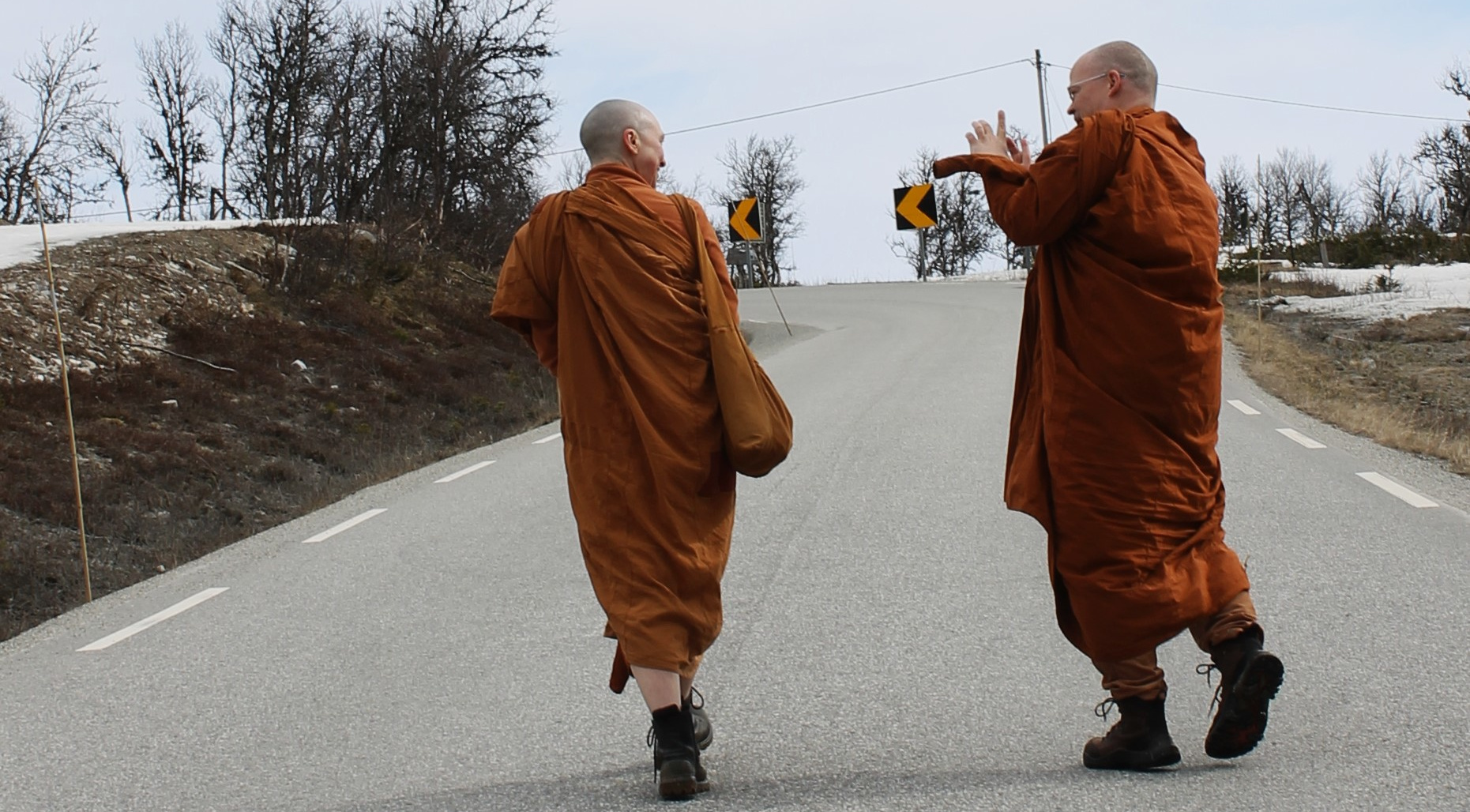
Early Buddhism – the fourfold sangha
The Buddha was encouraging both men and women to train and reach stages of awakening − some after ordination as bhikkhus and bhikkhunis and some living a normal live, which is called the fourfold sangha:
“If women (bhikkhuni) were allowed to go forth, would they be capable of realizing the fruit of stream-entry, the fruit of once-returning, the fruit of non-returning, and the fruit of perfection?”
“Yes, they would.” (link)
19. “If a bhikkhu should wish: ‘May I, by realising for myself with direct knowledge, here and now enter upon and abide in the deliverance of mind and deliverance by wisdom that are taintless with the destruction of the taints,’ let him fulfil the precepts, be devoted to internal serenity of mind, not neglect meditation, be possessed of insight, and dwell in empty huts. (link)
Bhikkhunis
7. Sakulā
97. Living in a house, I heard the doctrine from a bhikkhu, and saw the stainless doctrine, quenching, the unshaken state.
100. I was ordained as a bhikkhunī, and recollected that I had been born before. The divine eye has been purified; it is spotless, well-developed.
101. Seeing the constituent elements as other, arisen causally, liable to dissolution, I eliminated all āsavas; I have become liberated. (link)
15. Uttarā
15. I was restrained in body, speech, and mind. I have plucked out craving root and all, and have become cool, liberated. (link)
18. Saṅghā
18. Giving up my house, gone forth, giving up son, cattle, and whatever was dear to me, giving up desire and hatred, and discarding ignorance, plucking out craving root and all, I have become stilled, liberated. (link)
Bhikkhus
45. Sappadāsa
405. It is 25 years since I went forth. Not even for the duration of a snap of the fingers have I obtained peace of mind.
410. Then my mind was released; see the essential rightness of the doctrine. The three knowledges have been obtained, the Buddha’s teaching has been done. (link)
23. Rāhula
295. They know me as “lucky” Rāhula, fortunate for two reasons; one that I am the Buddha’s son, and the other that I am one with vision into truths.
298. I, casting off that sensual pleasure, cutting Māra’s bond, plucking out craving root and all, have become cool, liberated. (link)
2. Sāriputta
981. Of restrained conduct, full of mindfulness like a mindful one, meditating with restrained intentions, vigilant, delighting in inward things, with self well-concentrated, alone, content, him they call a bhikkhu.
1016. Strive with vigilance, this is my advice; come now, I shall be liberated; I am completely released in every way. (link)
Universal Declaration of Human Rights
The main foundation for gender equality in the Universal Declaration of Human Rights appears in several articles, especially Articles 1, 2, and 7:
Article 1 — Equal dignity and rights
“All human beings are born free and equal in dignity and rights.”
This establishes the core principle that all humans—regardless of gender—have equal inherent worth. (link)
Article 2 — Non-discrimination including sex
This is the clearest direct statement about gender equality.
“Everyone is entitled to all the rights and freedoms set forth in this Declaration, without distinction of any kind, such as race, colour, sex, language, religion…”
The word “sex” here means rights cannot be denied because someone is male or female. (link)
Article 7 — Equality before the law
“All are equal before the law and are entitled without any discrimination to equal protection of the law.”
This supports: 1) equal legal treatment, 2) protection against gender discrimination (link)
Kongeriket Noregs grunnlov
§ 98.
Alle er like for lova. Ikkje noko menneske må utsetjast for usakleg eller mishøveleg forskjellsbehandling. (link)
Lov om likestilling og forbud mot diskriminering i Norge
§ 1.Formål
Lovens formål er å fremme likestilling og hindre diskriminering på grunn av kjønn, graviditet, permisjon ved fødsel eller adopsjon, omsorgsoppgaver, etnisitet, religion, livssyn, funksjonsnedsettelse, seksuell orientering, kjønnsidentitet, kjønnsuttrykk, alder og andre vesentlige forhold ved en person.
Med likestilling menes likeverd, like muligheter og like rettigheter. Likestilling forutsetter tilgjengelighet og tilrettelegging.
Loven tar særlig sikte på å bedre kvinners og minoriteters stilling. Loven skal bidra til å bygge ned samfunnsskapte funksjonshemmende barrierer, og hindre at nye skapes. (link)
Status i dag – Verden, Europa og Norge
Land som opprettholder Buddhas lære og menneskerettene:
- Japan – i dag kan både kvinner og menn generelt motta full ordinasjon i japansk Zen, og mange tjener som prester, lærere og abboter.
- Sri Lanka – bhikkhuni-ordinasjon gjenopplivet siden 1990-tallet, slik at både kvinner og menn kan få like muligheter til utvikling.
Land som IKKE tillater å følge Buddhas lære, og ikke følger FNs menneskeretter:
- Thailand – offisielle Sangha-myndigheter anerkjenner ikke bhikkhunier
- Tibet – Tibetansk buddhisme har aldri anerkjent eller tillatt bhikkhunier
- Europe – Amaravatis nettverk i Europa (inkludert i Norege), kvinner får ikke lov til å gjennomføre treningen som bhikkhuni, på lik linje med men under trening som bhikkhus.
I Norge finnes det ingen foreninger med røtter fra Tibet eller Thailand som følger Buddhas etiske lære, de lever ikke opp til menneskerettene, og de følger ikke de norske lover.
DNBF gav en prinsipp-uttalelse på årsmøtet 2026 om likeverd, og vi jobber bevisst mot å følge Buddhas etiske standard, menneskerettighetene og de norske lovene når vi nå skal etablere et senter i Norge. Les prinsipputtalelsen her:

Del gjerne denne siden med en venn:
Om forfatteren: Nitho Bhikkhu