

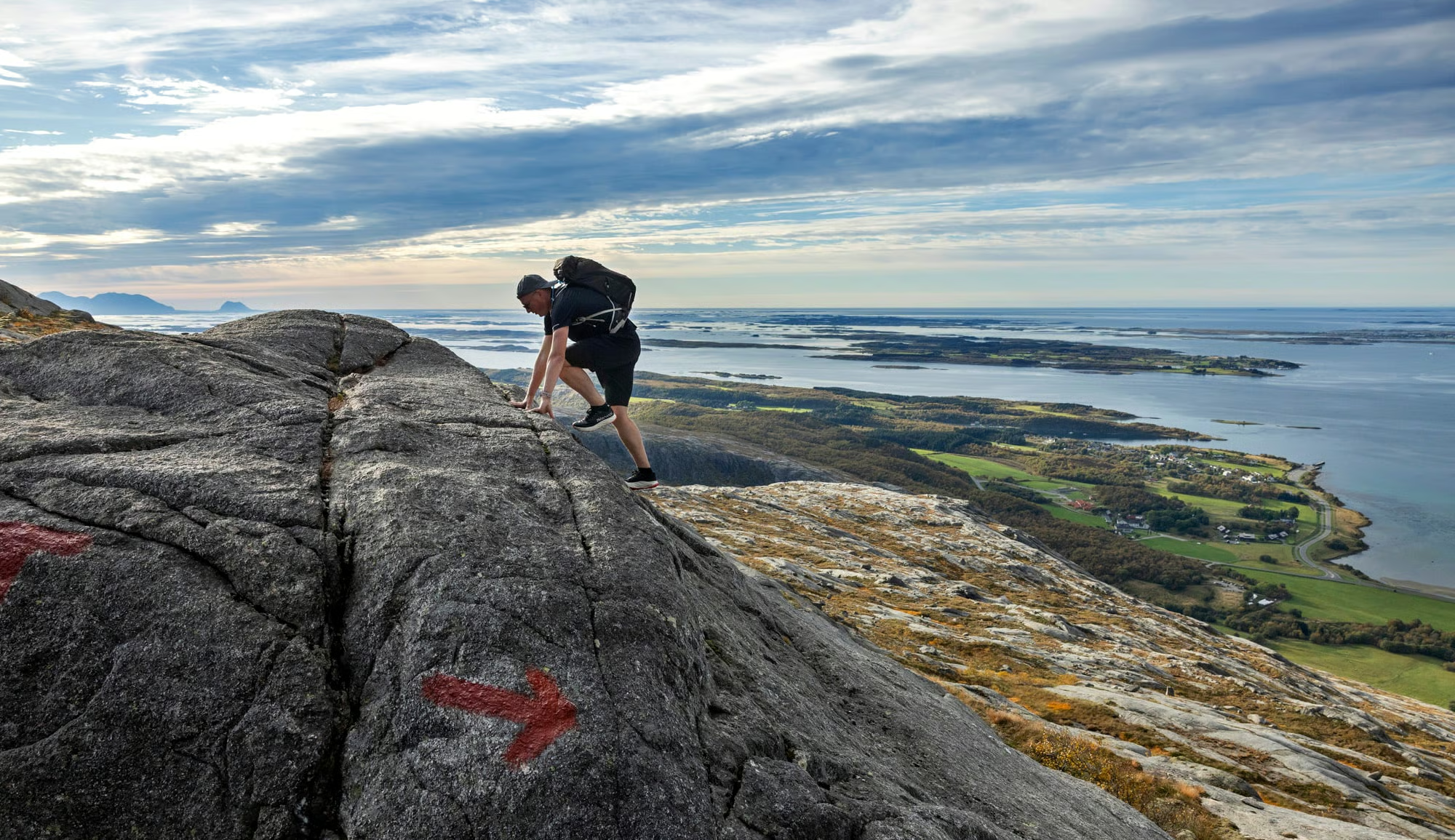
This text is written by and the photos are taken by Thomas Tervamäki Kleiven for the magazine Fjell og Vidde, DNT – The Norwegian Trekking Association. Following approval, the article has been reproduced here in its entirety for translation into English.
Find the Norwegian language original article here: https://fjellogvidde.dnt.no/ut-pa-tur/de-syv-sostre/
In the heart of Helgeland’s archipelago, two hiking boots pedal up Stortinden’s last meters of elevation. The shoes are filled by DNT volunteer Erlend Neergaard. He is passionate about facilitating for others, so that they too can experience the tranquility of northern Norwegian nature. 910 meters above sea level, he looks out over a mighty spectacle: seven beautiful mountain peaks, in blue-painted autumn colors.
Then he asks himself the question all hikers in his shoes would ask: Could I walk this entire traverse in one and the same trip?
Touched untouched. Noen turer er sementert på den norske turhimmelen. They have become trips that never go away. Trips that become culture. Trips we are talking about, such as Besseggen, Galdhøpiggen, Trolltunga and Dronningruta. On the Helgeland coast lies a trip that has exploded in popularity over the past six years.
The traverse over the Seven Sisters mountain range has become a shooting star in the Norwegian hiking sky. Here you are not alone on a trip, but the hiking experience has something virgin and untouched about it, compared to other hiking classics.
Natural medicine. It is said that the trip over the Seven Sisters has a father, and his name was Thor Bergesen. In the 1960s, Bergesen moved from the archipelago of Træna, far out at sea, and into Sandnessjøen.
Near the mainland, he turned his gaze upwards, looking for hiking routes in the mountains. Many wondered what he was going to do up there, all the time there was nothing to grow in the barren stone landscape. But Bergesen had found something he liked up there.
From the 1980s, he began to mark the routes in the mountains, so that more people could experience them. “The best medicine is to get out into nature, and that medicine is completely free,” he often said.
In 2013, he was awarded the King’s Medal of Merit for his efforts, after marking “almost all the mountain hikes in outer Helgeland with red T’s”, according to the County Governor of Nordland.
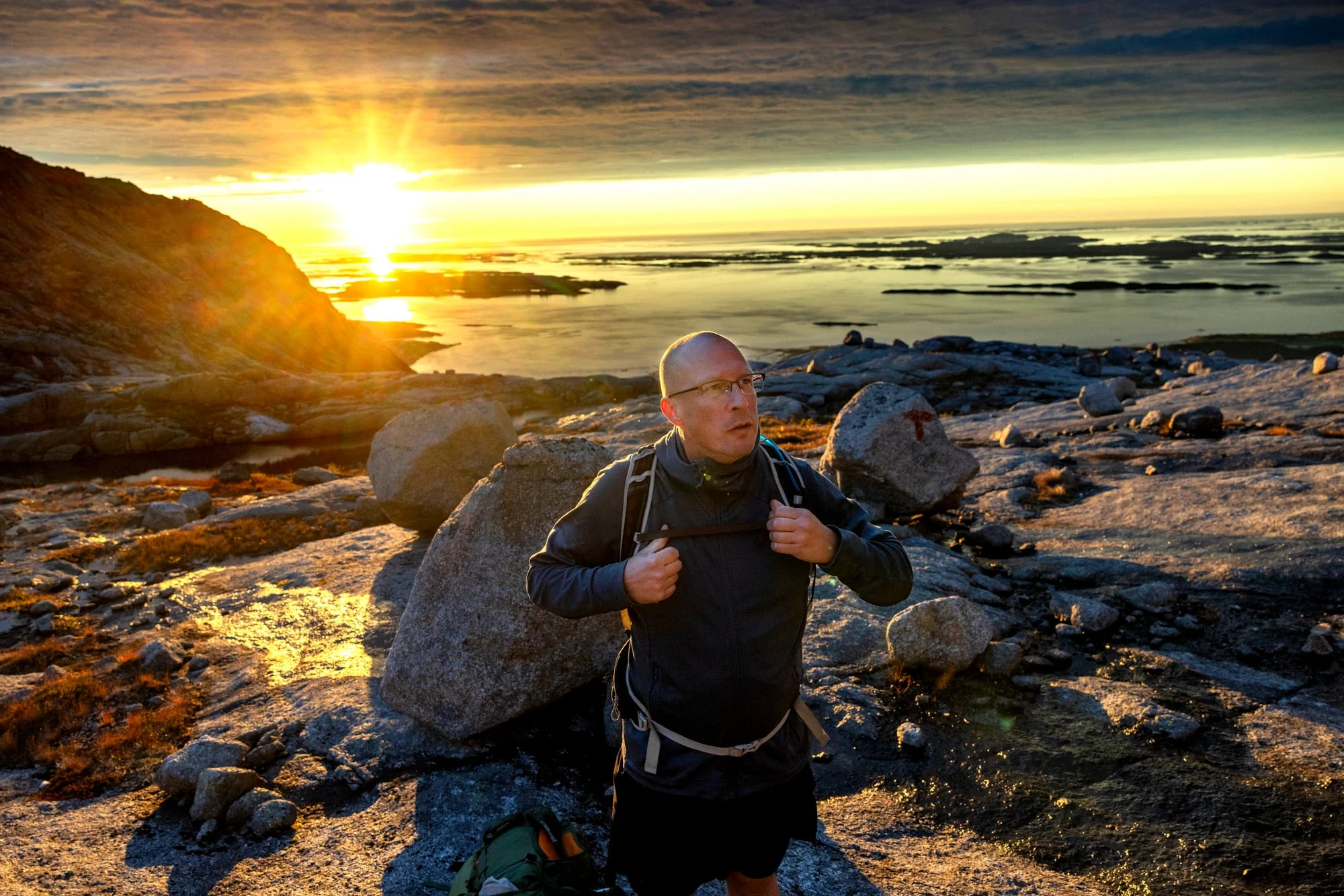
In Erlend Neergaard’s spiritual journey, meditation and exploration of one’s own consciousness have played an important role together with northern Norwegian nature.
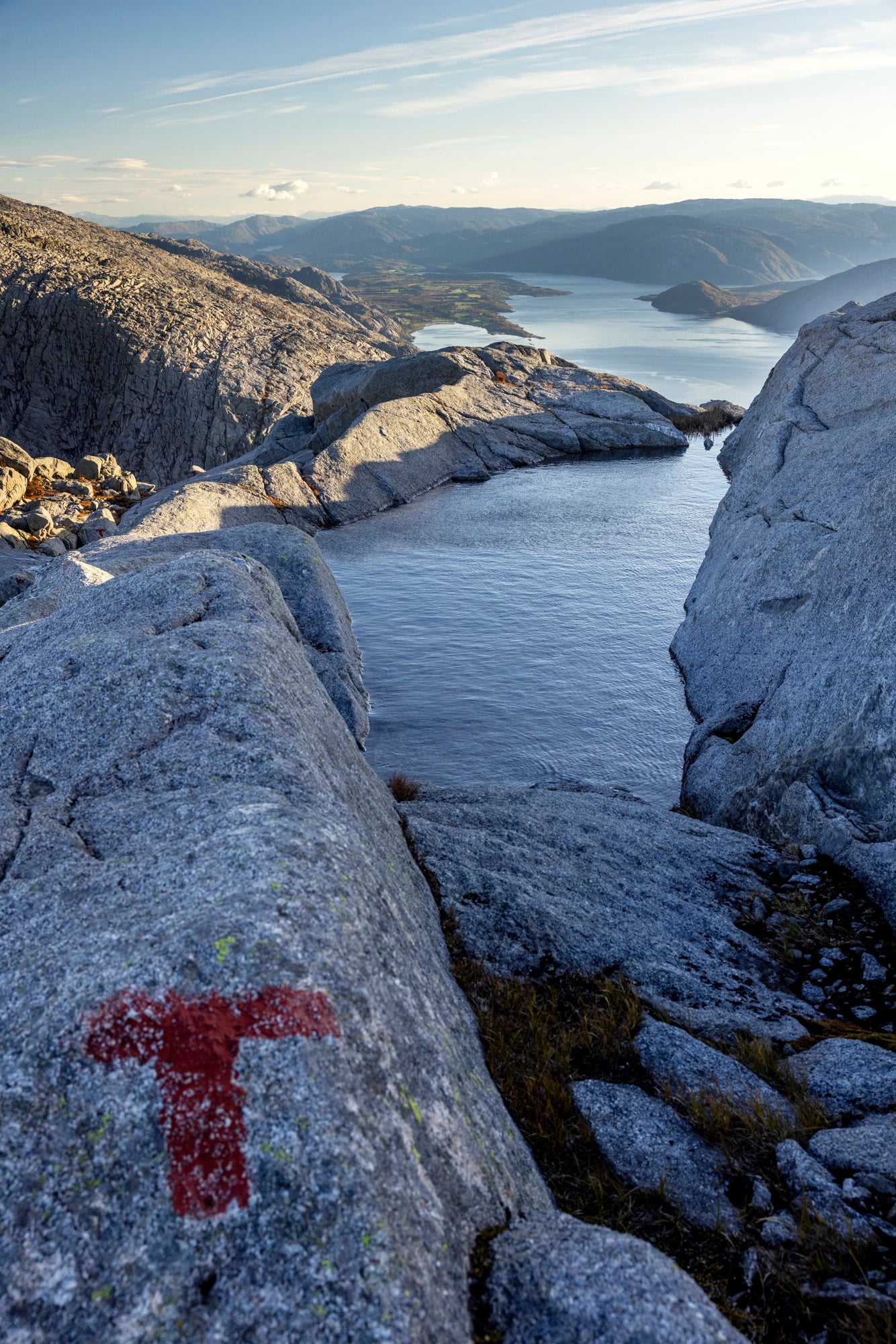
The walk over all the peaks is an obstacle course of rocks and water.
These mountains have stood here for millions of years and will stand here for a couple of million years more. They can be trusted. – Erlend Neergaard
Top 2. Erlend Neergaard is one of the many thousands of people who have benefited from Bergesen’s red badges. The badges have helped to give direction in life.
“Altitude meters is the best I can eat,” says Neergaard on the way up the day’s other sister: Kvasstinden (1013 m).
Altitude has not always been a favorite of the man who grew up at the foot of these mountains. In his youth, his wounds and his time as a student, he was hardly interested in hiking. He was inactive, overweight and no stranger to experimenting with drugs. The transformation started with a woman – and continued in a spiritual journey.
When he broke up with his girlfriend, Neergaard went straight into a depression. The way out of it took place in two shoes – in the mountains and in the forest. The trips gave him a new look at the mountains around his childhood home.
“When you’re up here at the top and look down, at the tiny cars, the everyday problems become infinitely far away. It gives perspective and belonging. These mountains have stood here for millions of years and will stand here for a couple of million years more. They can be trusted. It provides stability in life,” says Neergaard.
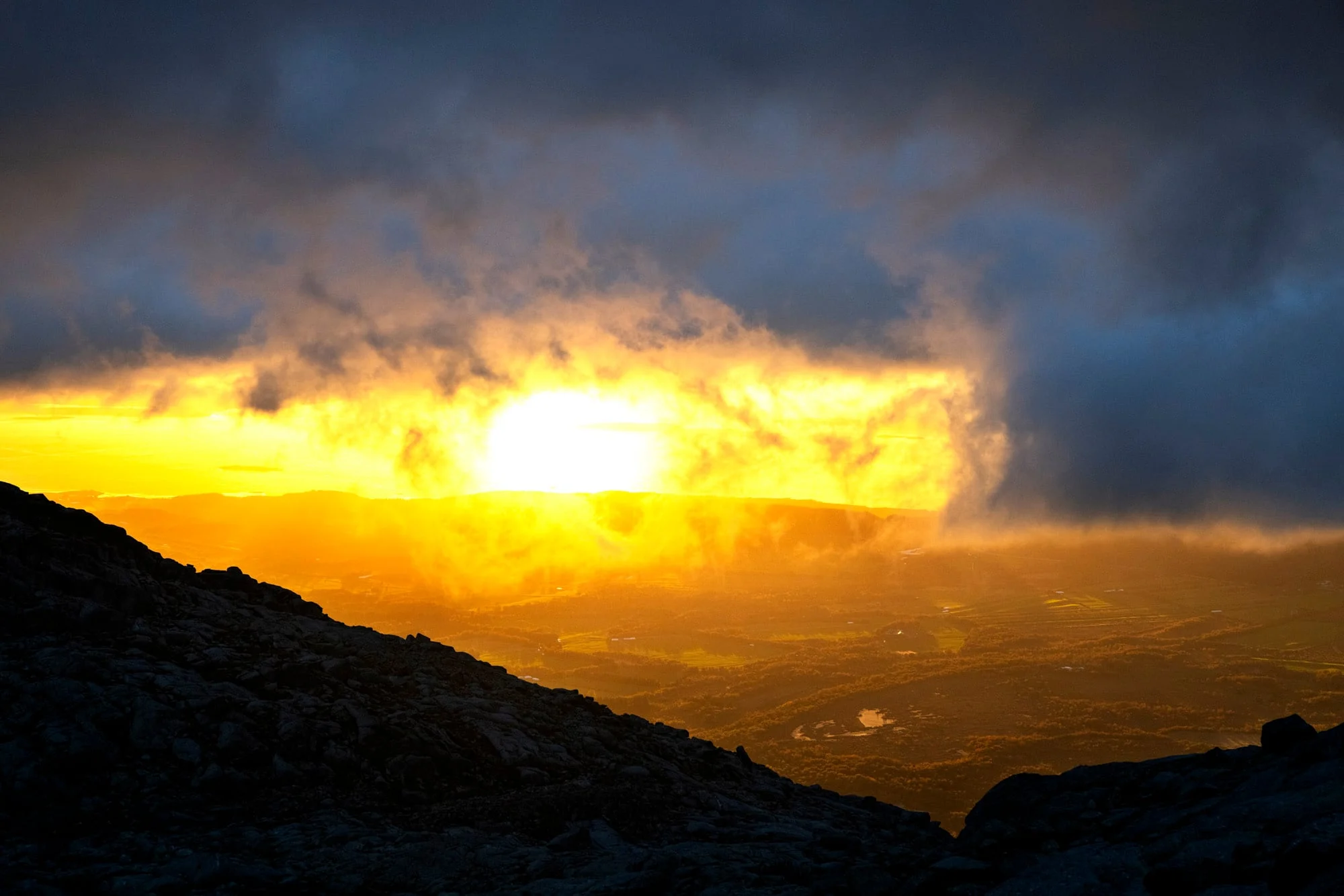
As the sun sets over Helgeland, he looks out at Træna, Lovund, Hestmannen and Dønnmannen.
“I don’t feel any worries here. Everything is as it should be. Right now I couldn’t add anything or subtract anything, to have as good a time as you can have.
Near death. Kvasstinden is Neergaard’s favorite place in the whole world – even though it was here that things almost went wrong for him. A few years ago, looking for a faster way down from the mountain, he slipped on a gravel rock.
There and then, he experienced complete presence as his body slid towards a precipice. Despite his fears, he felt surplus and was able to create the necessary friction. A couple of meters before the edge of the cliff, his body stopped.
As he lay there, on the hard mountain, feeling the feeling of not dying, he saw the most amazing sky above him.
“I remember it as if it were yesterday: a sky I’ve never seen before. The blue color was amazing. The most beautiful one I’ve ever seen. Since then, he has been aware of this feeling in the mountains: to be completely present.
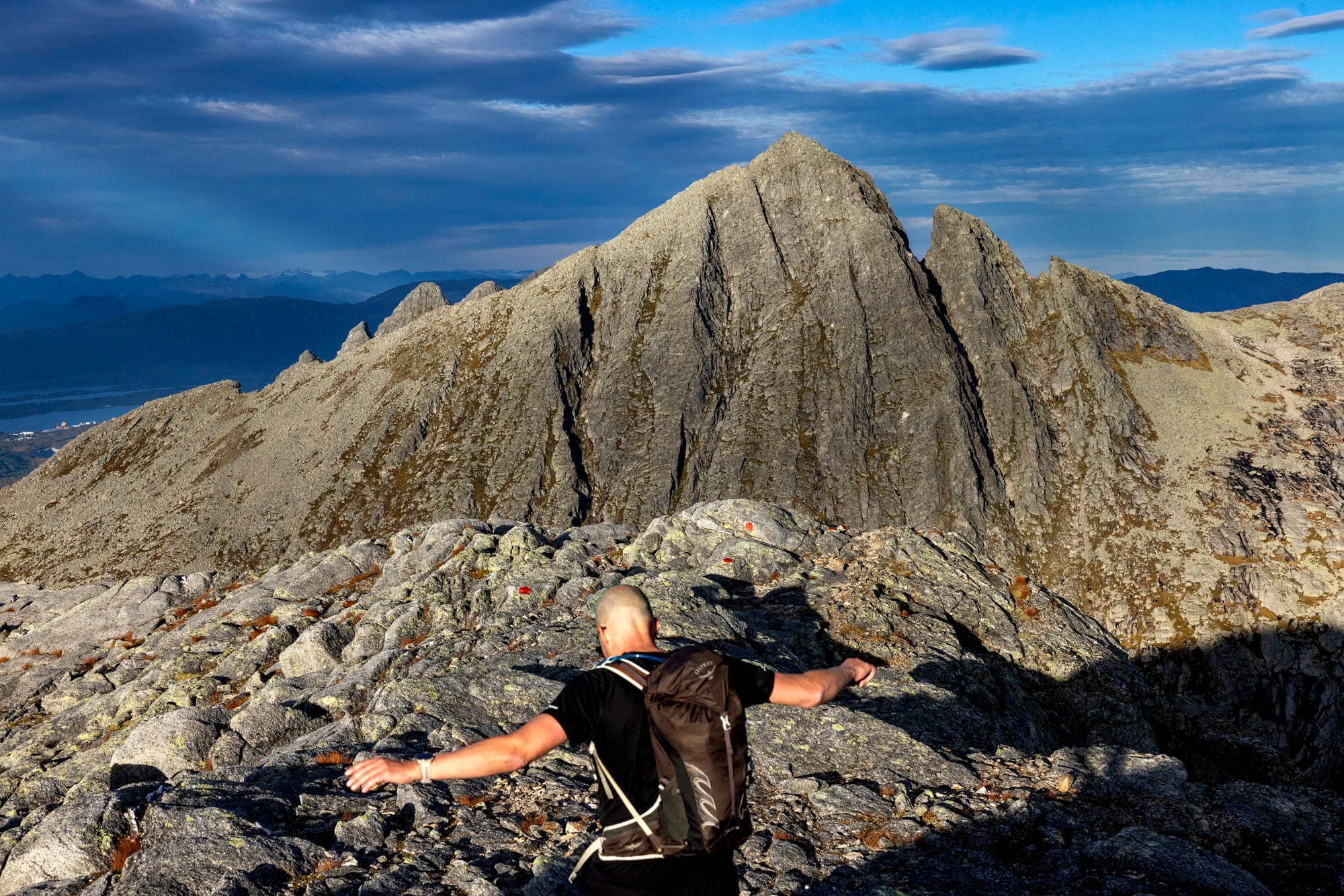
Stortinden (910 m) is the Seven Sisters’ first peak when you walk from the south. From here, Erlend Neergaard looks straight over at Kvasstinden (1013 m).
Top 3 and 4. The road ahead, to Tvillingan (980 masl. and 948 masl.), is a roller coaster of a red-marked path. Up and down, up and down. Through narrow gorges and past boulders, in search of the most appropriate route over a mosaic of swamps, mosses, streams, rocks and pools.
Finding the path is demanding. The last mountainside up towards Tvillingan looks impossible. Is it then too steep to be a red-marked path? But no, there is a way. The red badges guide you safely to the top.
The growth. When the Covid pandemic shut us down, it was as if an entire people were looking north. Many of those who came from the south did not drive all the way to Lofoten. They stopped on the Helgeland coast and found Thor Bergesen’s red marks.
At the Seven Sisters, traffic exploded. In the past, local hikers met “the occasional German” in the mountains. From 2020, the mountains acted as a magnet for people seeking the slightly untouched feeling. For old hiking trotters, it was special to suddenly see so many young people in the mountains. The hiking trails looked like a pickup spot!
The locals told the truth: It’s almost as nice here as in Lofoten, but only a fraction of the tourists.
Top 5. Skjerdingen (1037 m) is one of the most family-friendly sisters and serves as a kind of centerpiece on the journey. This is the roller coaster’s calm middle section before it drags on at the end, in the steep finale of the trip.
My thighs are starting to tenderize, but the feeling of flow is still good. Constantly “picking” tops is good for motivation. At The Seven Sisters, it is never far to the next peak. You always have a treat in sight.
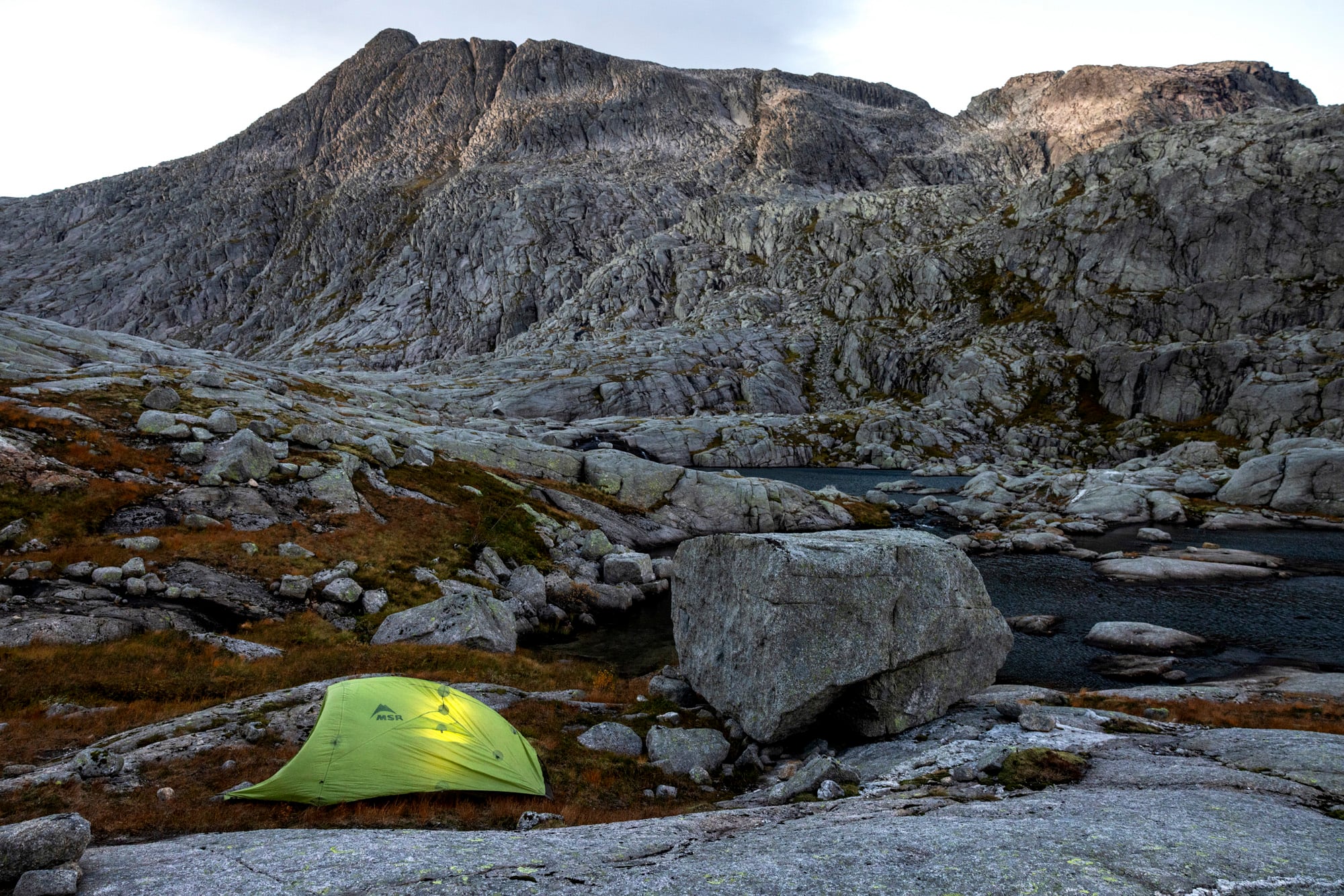
If the trip is done with a tent on the backpack, Tormodsvollvatnet (478 masl.) can be a nice place to sleep.
Anyone who has gone on longer walks has felt this magic and is gradually drawn to it. – Erlend Neergaard
Confidence and mountains. Tidligere kjente Erlend Neergaard på en underliggende misnøye i livet. A feeling that he constantly tried to escape, but never quite understood why he felt so strongly. Then he discovered the Buddhist faith, and understood that the solution to the unrest is not something he can just think of.
With Buddhism came a new worldview that is connected to the state of consciousness he seeks in nature.
“Attentive presence is perhaps the best term in Norwegian,” says Neergaard.
The condition is easier to achieve when the trip has a certain length. In the meetings between outdoor life and meditation, everyday worries are set aside.
“Everyone who has gone on longer walks has felt this magic and is gradually drawn to it. You get hooked, quite simply, and start to love being on a trip because, for once, you are completely present.
Top 6. 1019 meters above sea level, an eagle hovers just below Grytfoten, which is the trip’s sixth sister. The wind is raging, but the eagle dominates the landscape. It likes the resistance in the wind. The bird prefers movement to calm.
My thoughts go to the Seven Sisters’ own father, Thor Bergesen. When his health no longer allowed hiking in the mountains, life became hard to live. One summer day in 2017, he put the medal from the King on the couch and went for his last walk.
His son Rune, who has now taken over his father’s mountain marking, puts it this way: “That dad should sit in a retirement home was probably a bad solution.”
Despite the tragedy, the legacy lives on. The eagles follow Bergesen’s red tagging and the thousands of hikers who enjoy the benefits of the mountain man’s volunteer efforts.
Everyone who has walked the trip from south to north says the same thing: The last stage from Grytfoten and down to the sea takes longer than you think.
Karma. Buddhists believe that people get what they deserve: Good deeds lead you to a better place, while bad deeds don’t pay off over time. On summer vacation, Erlend Neergaard felt like doing something good for others.
After nice weeks in the Dolomites, with good food and incredible nature, he went to southern Italy to build outdoor toilets at a Buddhist monastery. He calls it voluntary work. For him, it’s about letting go of his own ego and doing something that is good for other people and for his own development.
About DNT, he thinks a bit alike. There he does not build outhouses, but simple footbridges. After years of effort, the hikers at Sandnessjøen can now walk dry-shod to and from the Seven Sisters. The bog areas have been handled with planks and red paint.
“It gives good karma,” says Neergaard.
“Almost as good as when I make an outdoor toilet.
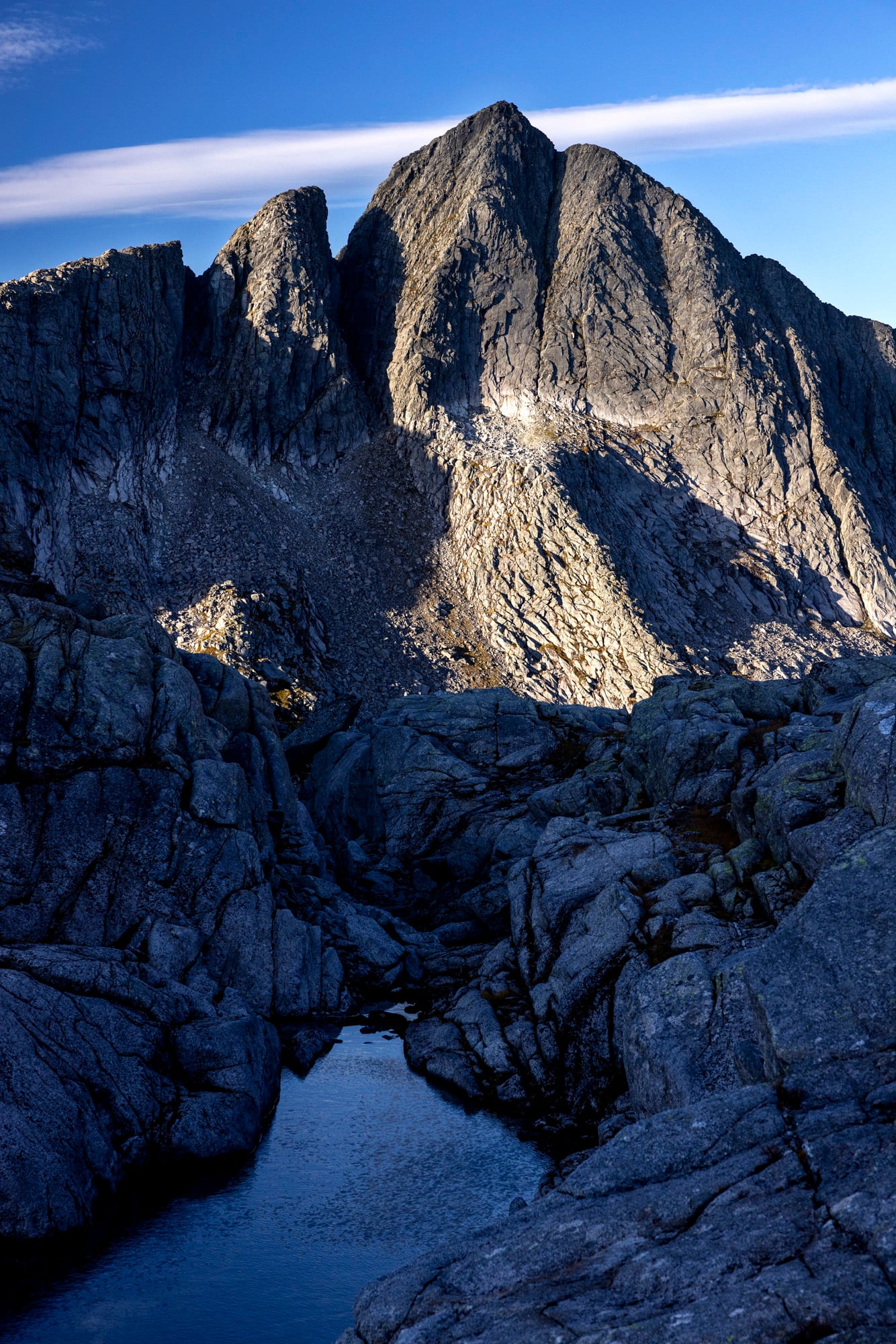
Top 7. Botnkrona (1072 m) is a mighty spectacle. To the far north of the Seven Sisters, the mountain looks like an insurmountable stone queen. From a distance, you don’t know how to reach the top, but as always at The Seven Sisters, someone else has been here before you to show you the way.
With arms and legs, you find your way up. The mountain is passable for anyone who is not afraid to use their arms on a trip.

Feel free to share this page with a friend:
About the Author: Erlend Neergaard